How High Should Pictures Be Hung? A Complete Wall Art Height Guide
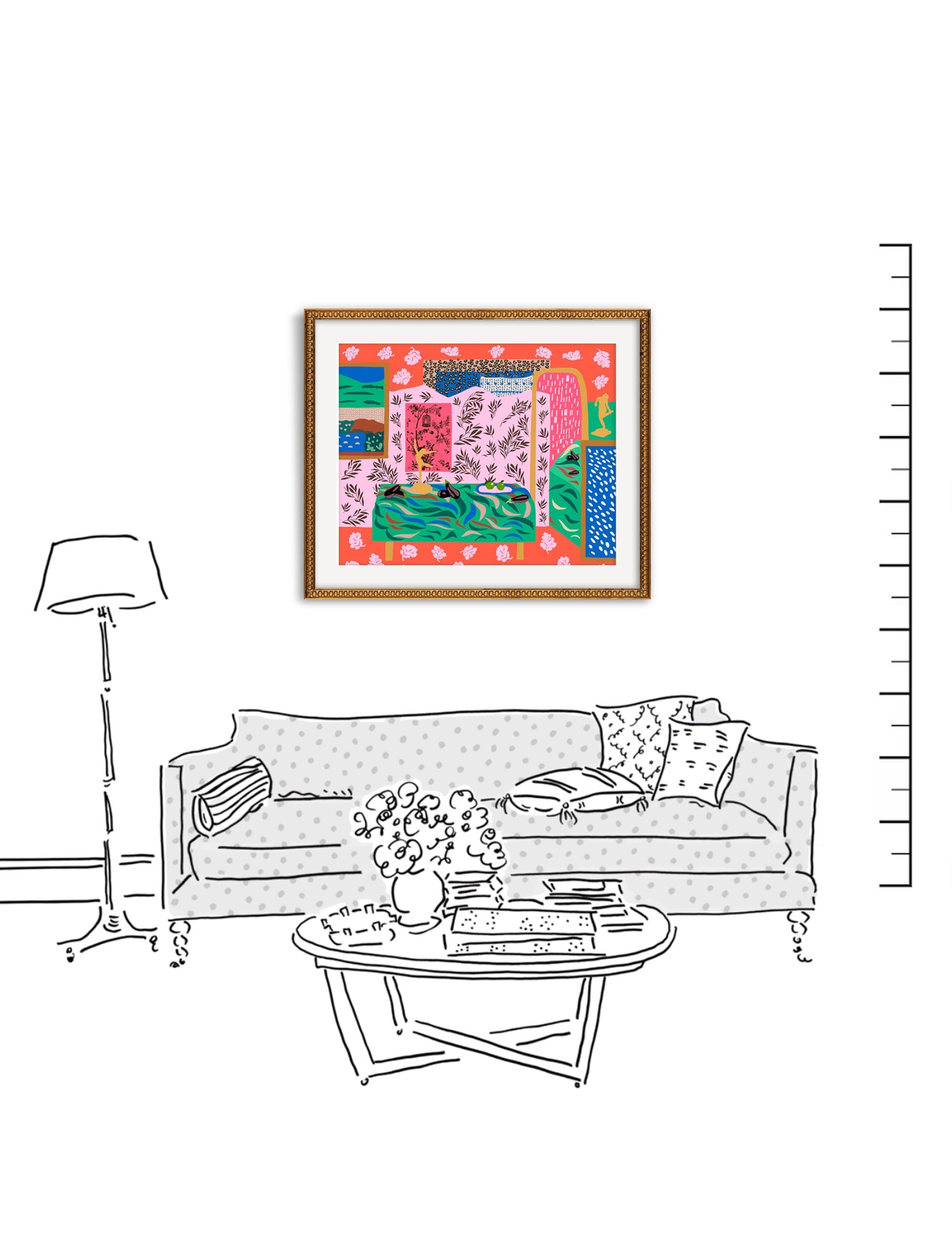
How to hang your art doesn't have to be difficult, a few tips and tricks can help provide guidance.
Hang a piece at the right height, and a room settles; hang it too high, and everything feels a little unmoored, the art drifting off on its own. It's one of those small things that makes a surprising difference. The catch is that every room plays by slightly different rules: ceiling height, furniture, the size of the piece, the way you drift through the space, so treat what follows as friendly starting points rather than laws set in stone.
Key Takeaways
- Most artwork feels right when its center sits around 57 to 60 inches from the floor, which aligns with average eye level.
- When hanging art above furniture, keeping it about 6 to 8 inches above the piece below helps everything feel connected.
- Large artwork can sit slightly lower, with its center around 54 to 57 inches, creating a more grounded look.
- Gallery walls work best when the whole arrangement has a center point at 57 to 60 inches.
- Specific rooms sometimes need personal adjustments. Dining rooms benefit from slightly lower art for seated viewing, and hallways can sometimes handle a little extra height.
- Measure from the artwork’s center, not the top edge, when using the 57 to 60 inch guideline.
The Standard Picture Hanging Height Rule
Nearly every designer starts in the same place: center your artwork about 57 to 60 inches from the floor. It's built on average eye level, and it's the height galleries and museums use, which is exactly why a room tends to feel more balanced the moment you follow it.
It holds up for single pieces and groupings alike, and once you've felt how it sits in your own space, you can drift up or down to suit the room.
Understanding Eye Level Placement
The short version: center your art 57 to 60 inches from the floor. Fifty-seven is the gallery and museum standard, the number the pros default to, and 60 suits higher ceilings, where a little extra lift keeps art from sitting low. Climb much above 60, and most rooms start to feel off, with the art creeping toward the ceiling and away from everything else.
You'll hear these two called the 57-inch rule and the 60-inch rule; really, they're the same idea measured to a slightly different center. Start at 57, and only lift toward 60 when the ceiling or the furniture asks for it.
It's fair to wonder why the standard sits at the lower end when everyone's eye level is different. That's the very reason. Real eye level ranges from about 57 to 65 inches depending on height, so anchoring low keeps art comfortable for the most people, rather than perfect for one and a stretch for the rest. And wherever you land, measure to the center of the piece, not the top edge, since that one habit is behind more too-high pictures than anything else.
How to Work Out Where the Hook Goes
Knowing your art should center at 57 inches is one thing. Turning that into a mark for the hook is where people tend to get stuck, because the hook doesn't sit at 57. Here's the little bit of arithmetic, in three steps.
Take half the height of your artwork. Add it to 57. Then subtract the drop, the gap between the top of the frame and the taut hanging wire.
Let's put real numbers to it. Say your piece is 24 inches tall with a 3-inch wire drop. Half of 24 is 12; add 57, and you're at 69; take off the 3-inch drop, and your hook goes at 66 inches. That's your mark.
The step everyone forgets is pulling the wire tight before measuring that drop. Lying flat, the wire goes slack, but the moment the frame hangs, it pulls taut and lifts the piece. Measure the slack version and your carefully placed art ends up hanging low, so hook a finger under the wire, draw it up toward the top of the frame as if it were already on the wall, and measure from there. If your frame has two D-rings instead of a wire, measure to each ring and mark two hooks, which keeps a wide piece reassuringly level.
Hanging Art Above Furniture
Hang art above furniture, and you create a little relationship between the piece and whatever sits beneath it. When they connect, the wall feels layered and considered.
The 6 to 8 Inch Guideline
Leave roughly 6 to 8 inches between the top of the furniture and the bottom of the art, close enough to feel connected, but with enough air that the piece isn't resting on it.
Furniture Height Considerations
Low furniture lets you stay near that 57 to 60 inch range, while a tall headboard or dresser might pull the art lower so the two feel like a pair. The relationship between them matters more than any perfect number.
Artwork Size Proportions
A piece about two-thirds the width of the furniture below tends to feel just right. Larger pieces can break that rule for drama. Size influences where the artwork sits, so trust what looks natural in the room.
Room-Specific Hanging Guidelines
Every room has its own rhythm, so the ideal height shifts with how you actually live in the space.
Living Room Art
On an open wall, the standard height is a safe place to begin. Above a sofa or console, lean on that 6 to 8-inch gap, and let large pieces settle a touch lower in rooms where most of the looking happens from the couch.
Bedroom Art
Above a bed, the headboard joins the conversation, and a tall one naturally brings the art down. Since you'll usually see bedroom art from the bed rather than standing, feel free to let it sit lower than you would elsewhere.
Dining Room Art
Dining rooms are lived in from a chair, so art tends to feel happier a little lower, with its center around 52 to 57 inches.
Hallway and Entryway Art
Hallways are walked through on your feet, so art can ride a touch higher. In an entryway, it's a kind of welcome, so whatever height feels warm and easy to take in on your way through is the right one.
Bathroom Art
In bathrooms, float art above a vanity or shelf the way you would other furniture, and keep pieces a little higher in a small room so things don't feel crowded.
Sloped, Vaulted and Stairway Walls
Staircases direct your eye on a diagonal, allowing the artwork to follow that flow. Instead of measuring from the floor, anchor each piece to the angle of the stairs. Keeping the center of each piece at a consistent distance from the steps creates a smooth visual rhythm as you move upward or downward. Think of it as walking alongside the artwork.
Angled walls are where the standard height quietly stops behaving, and where a lot of us start second-guessing. On a sloped or vaulted wall, hold your nerve and hold the line: 57 to 60 inches to the center, measured straight up from the floor, just as anywhere else.
Every instinct will tell you to chase the art up toward the peak of the ceiling to fill that lovely open space, and that's the instinct to ignore. The height belongs to the person standing there looking, not to the ceiling overhead, so lifting the art only floats it out of comfortable view.
A staircase plays by its own rules, since there's no single floor to measure from. Let the art travel with the line of the stairs, keeping each piece the same distance from the treads rather than a fixed height off the ground. The easiest way: measure up from the tread directly beneath each frame, using the same number every time, so the whole run climbs neatly in step with the staircase.
Hanging Gallery Walls
Gallery walls act like one big piece, so height is really about the arrangement as a whole, not any single frame.
Gallery Wall Center Point
Pick a center point for the grouping and set that around 57 to 60 inches from the floor, then grow the arrangement outward and upward from there.
Planning the Layout
Lay it all out on the floor first, since it's the easiest way to see the shapes and spacing before you reach for a hammer. Measure the full height of the group, find its true center, and put that at eye level.
Spacing Between Pieces
A few inches between frames gives everything room to breathe: 2 to 4 inches for most walls, tighter for a collected feel, wider for a bit of air. Keep it consistent, and measure between the frames themselves, not the images inside them, since a wide mat can make those two distances quite different.
Common Picture Hanging Mistakes
Every home has its quirks, so take these as gentle nudges rather than rules.
Hanging Too High
The one almost everyone does. Art near the ceiling stretches a room the wrong way; bring it down a little and the space warms right up.
Ignoring Furniture Relationships
Art hung too high above a sofa or console drifts free of it. Pull it closer and the two read as one composition.
Measuring From the Frame Top
Measuring from the top edge quietly pushes art higher than you meant. Measure from the center and everything stays consistent, whatever the size.
Not Considering How You View the Room
Bedrooms, dining rooms, and living rooms all have their own sightlines. Picturing how you move through a space will often find the right height faster than a tape measure.
Using the Wrong Fixing for the Weight
None of this matters if the piece won't stay put. A nail in drywall is fine for something light, but anything with real weight wants a proper wall anchor or, better yet, a screw into a stud. For a wide, heavy frame, two fixings set apart hold it far straighter than a lone hook in the middle. When you're unsure, go a little sturdier than you think you need; it's much easier than rehanging a fallen picture.
Conclusion
Most art looks its best with its center somewhere around 57 to 60 inches from the floor, but treat that as your opening move, not the final word. Your furniture, the way a room is used, and how you move through it all shape what feels right, drawing art close to sofas and headboards, letting large statement pieces sit a little lower for a grounded feel, and starting every gallery wall from a clear center. In the end, the best height is simply the one that makes the room feel calm and considered.
FAQs
What is the standard height to hang pictures?
Center the piece 57 to 60 inches from the floor, right around average eye level.
How high should art be hung above a sofa?
Leave about 6 to 8 inches between the sofa and the bottom of the art for a comfortable connection.
Should I hang pictures at 57 or 60 inches?
Either works. Go with 57 for a classic gallery feel, or 60 for high ceilings or a slightly lifted look.
How do I hang a gallery wall at the right height?
Treat the whole arrangement as one piece, find its center, and set that around 57 to 60 inches from the floor.
What is the 60-inch rule for hanging pictures?
It just means centering art at 60 inches rather than 57, the same eye-level idea nudged a little higher. Reach for it with tall ceilings or when you like a lifted look.
Does the rule change for tall ceilings?
Not the height; that stays with you, the viewer, so art shouldn't climb just because the ceiling does. What changes is scale: a taller room usually wants a larger piece, or two stacked one above the other.
Art Included: Aubergines on a table by Marine de
Published on: December 26, 2025 Modified on: September 21, 2026 By: Artfully Walls
Previous: How to Choose a Frame for Art: Matching Styles, Colors, and Sizes Next: How to Plan a Kitchen Gallery Wall
