Oversized Print vs Gallery Wall: Which Fits Your Home Best
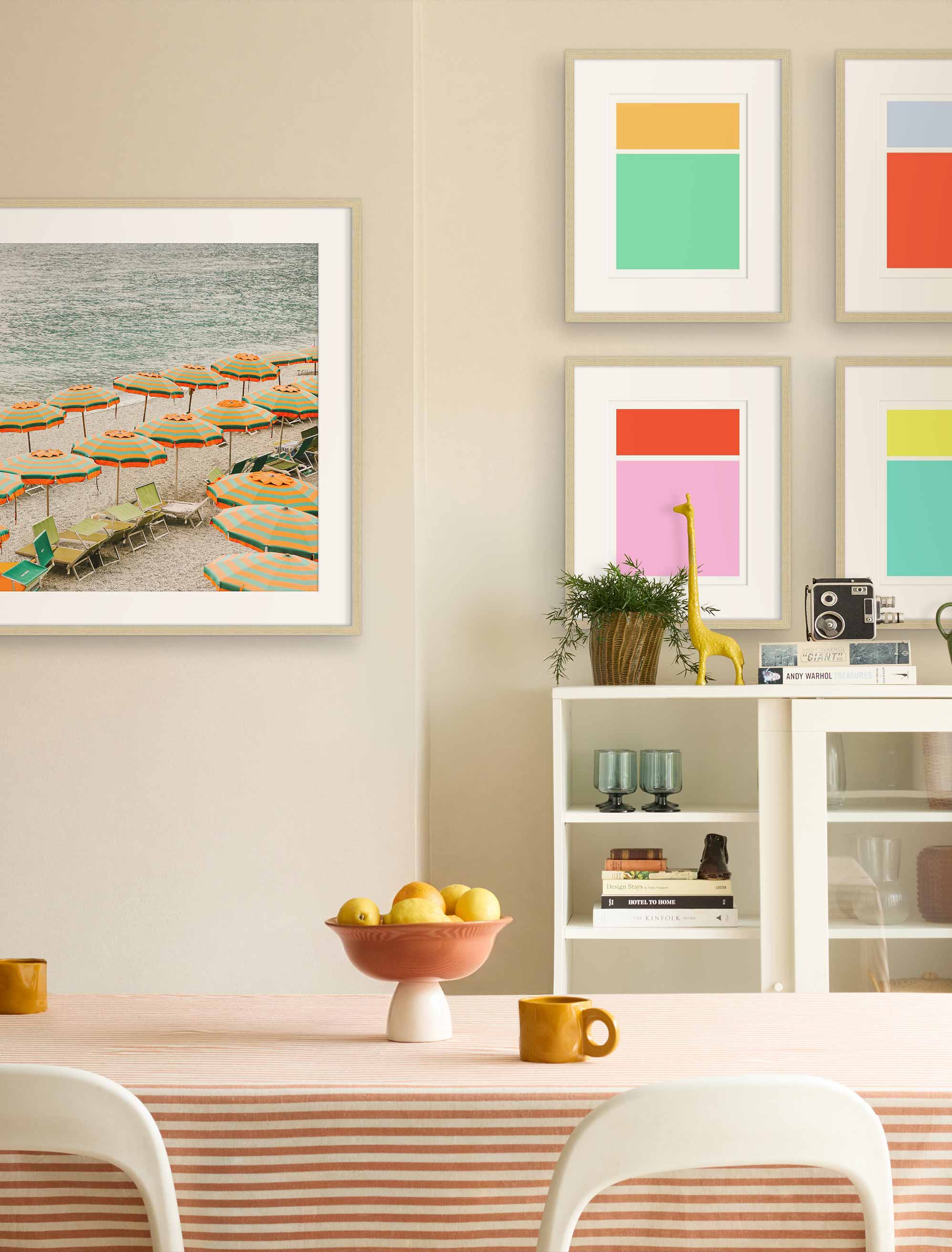
An oversized print creates a calm focal point, while a gallery wall adds personality, movement and a layered feel.
If you're standing in front of a blank wall weighing an oversized print vs gallery wall, you're asking exactly the right question, and the happy news is there's no wrong answer, only a better fit for your room. An oversized print works best when a room needs one calm focal point, clear scale, and minimal planning. A gallery wall works best when the room can handle more movement, personal pieces, and a layered story across several frames.
Think of it less as a design rule and more as a mood decision. The right call comes down to your room's scale, the feeling you want it to hold, your budget, how much flexibility you'd like, and, honestly, how much you enjoy planning. If you already know you want one confident piece, a single extra-large print is a lovely place to start. If you're still on the fence, stay with us. We'll walk it through factor by factor so the choice feels easy rather than fussy.
Key Takeaways
- An oversized print gives a room one focal point with less layout planning.
- A gallery wall creates a layered, collected effect with more visual movement.
- Furniture width and open wall space should guide the scale of either choice.
- A gallery wall is not always the lower-cost option once several framed pieces are included.
- The best choice depends on room energy, planning effort, and how much flexibility the wall need
Oversized Print vs Gallery Wall: The Quick Answer
An oversized print gives a room one calm, confident focal point, while a gallery wall creates more movement, variety, and personality. The better choice depends on how much visual energy you want the wall to bring into the space.
A single oversized print usually works best above a sofa, bed, desk, or console, especially when the rest of the room already includes patterns, shelving, textiles, or decorative details. It is also the simpler option, requiring fewer decisions around layout, framing, and spacing.
A gallery wall suits larger blank walls, hallways, and stairwells where several pieces can create a more layered, collected effect. It takes more planning, but it also offers more flexibility, since you can add new pieces or rearrange the layout over time.
Think about whether your room needs one clear place for the eye to rest or a more personal arrangement that tells a story. Most spaces naturally lean toward one of those feelings, and that instinct is often the best place to start.
When One Oversized Print Is the Better Choice
Choose one oversized print when your room is already busy, or when you simply want a settled, uncluttered wall. A single generous piece brings a lovely sense of order to a space that has a lot going on, and it gives the eye one clear place to rest.
Reach for one piece when the room already carries pattern, open shelving, stacks of books, or layered textiles. Piling a gallery wall on top of all that can tip a room into visual noise, while one strong print gathers everything together instead. A calm, atmospheric piece like The Space in Between 38 by Claire Desjardins, with its soft wash of blue and yellow, shows how a single work can hold a wall without shouting.
A large print can also make a small room feel more settled, as long as the scale is right. It sounds backwards, but one confident piece often reads calmer than a scatter of little frames, because it gives the room purpose rather than clutter. And oversized art tends to be faster to live with: you choose it once, frame it once, and hang it in an afternoon.
That ease makes it a natural fit above a sofa, a bed, a dining sideboard, or a desk. One bold piece carry a room, and a well-chosen statement print does exactly that.
When a Gallery Wall Makes More Sense
A gallery wall makes more sense when your room can carry more visual movement, and you'd love to mix subjects, sizes, and frame finishes. It turns a blank wall into something with rhythm and personality, and it rewards a little curiosity.
Lean toward a gallery wall when the collected look calls to you: a color story pulled across several frames, a mix of photography and illustration, or pieces gathered slowly over the years. This is the format that grows with you, since you can fold in a new find later without starting from scratch. It also suits walls that need more than one piece to feel whole, like a long hallway, a stairwell, or a wide living room wall where a single print might look a touch lonely.
The one thing a gallery wall asks for is a little forethought, so it reads as collected rather than crowded. A gallery wall planner lets you picture the whole thing before a single nail goes in, and it pays to sketch the layout before you commit so the spacing feels intentional from the start.
How Room Size and Furniture Change the Decision
Proportion, not piece count, decides how natural your art feels on the wall. Art above furniture usually looks balanced when it spans roughly two-thirds of the furniture's width, whether that width is filled by one piece or several.
Picture a standard three-seater sofa, around 84 inches wide. To feel right above it, your art wants to span about 56 inches . One oversized print can meet that width cleanly and sit as a single, calm anchor. Or three medium prints, hung with even gaps, can add up to the same total span while bringing more movement. Same proportion, two different moods, and both look intentional because the width is right.
Open walls need breathing room, too. Art doesn't have to fill every inch, and a little space around a piece (or around the whole gallery grouping) is what makes it feel considered rather than crammed.
When you're unsure, leave the edges some air. The 2/3 rule for wall art covers the full proportion breakdown, but as a first instinct, measure your furniture, aim for two-thirds, then decide whether one piece or several gets you there.
The Budget and Framing Trade-Offs to Consider
The cost comparison depends on size, paper or canvas, frame choice, and how many pieces you buy. There's no single cheaper path by default, so it helps to picture the whole thing rather than one price tag.
One large print may cost more upfront as a single item, but it involves fewer framing decisions and fewer separate purchases. A gallery wall can start small with two or three pieces, though the total tends to climb as you add more prints, more frames, and the hanging bits that go with them. Framing shapes both the mood and the finished scale of either option: a wide mount and a generous frame make a print read larger and more formal, while a slim profile keeps things light.
The right framed print options genuinely change the final look, so it's worth picturing the frame as part of the piece rather than an afterthought.
A Simple Checklist Before You Choose
This quick checklist makes the decision easier before you start shopping. Run through it once, and the right format usually reveals itself.
- Measure your wall and the furniture beneath it, then aim for art that spans about two-thirds of that furniture width.
- Choose the feeling you want: one calm focal point, or a collected, layered story.
- Decide how much visual movement your room can comfortably hold right now.
- Check how much planning, hanging, and future rearranging you actually want to take on.
- Preview your choice in the room before buying whenever you can, so the scale and mood feel right.
For a little more help getting the size right, this wall art size guide breaks it down step by step. Treat the checklist as a friendly nudge, not a rulebook, and trust the answers that feel true for your space.
How to Make Either Choice Feel Finished
Finishing details are what make both options feel intentional rather than accidental. A few small choices pull the whole wall together, whichever route you take. Repeat one color, material, or mood from the room, so the art feels connected to what surrounds it.
Give a single oversized print enough open space to breathe, and keep gallery wall spacing consistent enough to read as purposeful. Small, steady gaps do a surprising amount of quiet work.
From here it's an easy split. If you're leaning toward one hero piece, the art prints collection is the place to start. If a collected look is calling, gallery walls are still very much in style, and a planner makes them simple to arrange. Either way, you really can't get it wrong.
FAQs
Is one oversized print better than a gallery wall above a sofa?
One oversized print is often better above a sofa when the room needs a clear focal point and a calmer wall. A gallery wall works when the sofa area can hold more movement, as long as the whole arrangement still spans a balanced portion of the sofa's width, roughly two-thirds.
Does a gallery wall make a room look smaller?
A gallery wall can make a room feel busy if the pieces are too small, too crowded, or visually unrelated. It can also make a room feel layered and personal when the spacing, frame finishes, and color palette feel connected. Cohesion, not piece count, is what keeps it from shrinking a space.
Is an oversized print a good choice for a small room?
An oversized print can work beautifully in a small room when it gives the eye one place to rest. Choose a subject and frame that suit the room's mood, then leave enough open wall around the piece so it feels intentional rather than squeezed in. One confident piece often beats several small ones.
Which costs more: one large print or a gallery wall?
The cost depends on print size, material, framing, and the number of pieces. One large print may cost more upfront as a single item, while a gallery wall can become more expensive as you add multiple prints, frames, and hanging supplies. Neither is automatically the cheaper choice.
Can I mix oversized art with a gallery wall?
Yes. One larger print can act as the anchor inside a gallery wall, especially when the smaller pieces share a color, subject, or frame finish. This approach works best when the large piece has enough space to lead, so the arrangement feels balanced rather than competitive.
Art Included: Italian Summer by Wesley and Emma Teague
Opera, Vespa, Sun and Surf, Sorbetto by Jodee Molina
Published on: July 17, 2026 Modified on: July 22, 2026 By: Artfully Walls
Previous: Soft Surrealism in Wall Art: The Dreamy Trend Defining 2026 Next: Back to School Kid Room Wall Art Ideas
