Giclée Print vs Art Print: What’s the Difference?
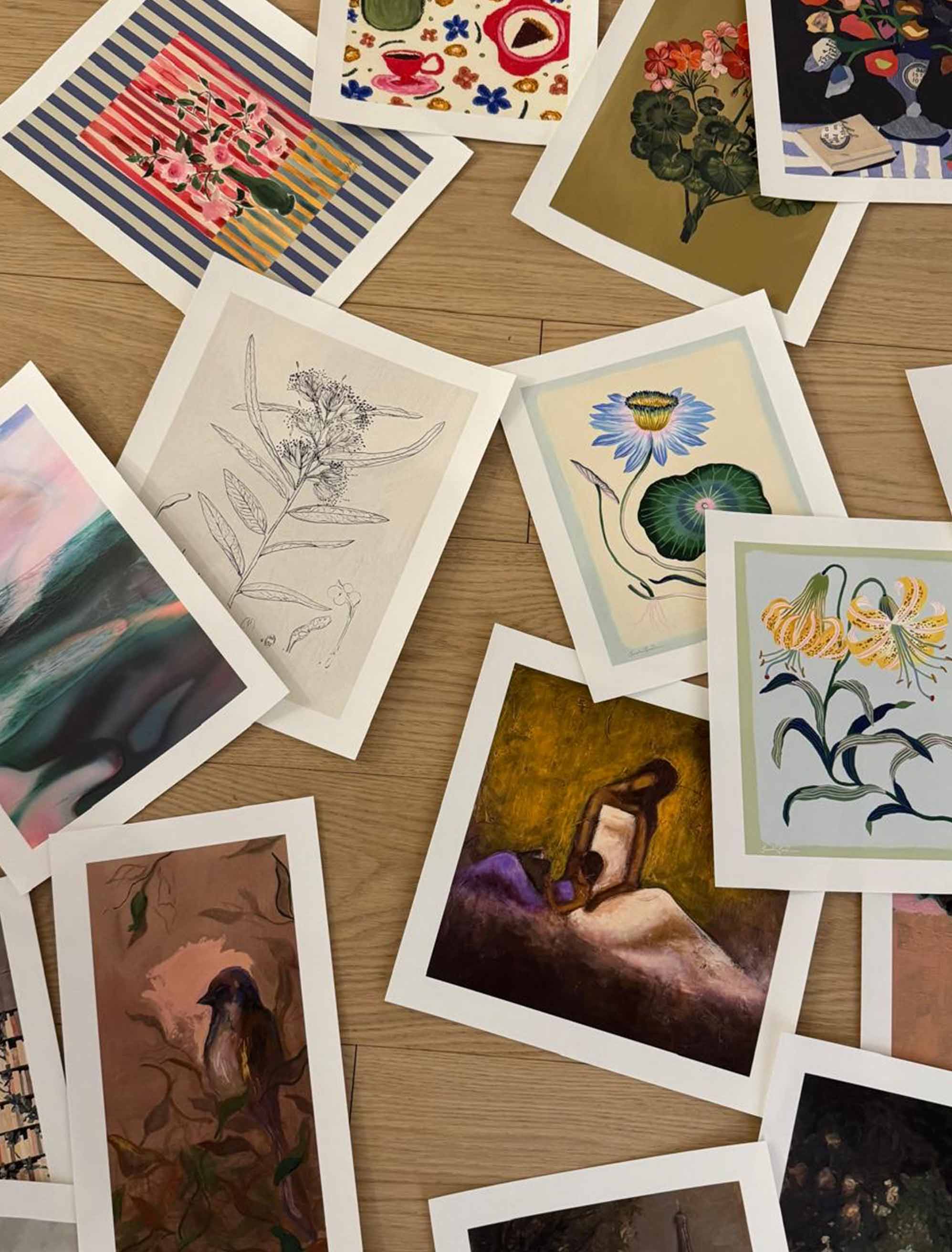
Giclee art prints availble on Artfully Walls.
If you’ve spent any time looking at art prints, you’ve probably seen the word giclée appear again and again. Sometimes it’s used as a mark of quality. Other times, it feels more like a buzzword.
At a basic level, giclée prints and standard art prints are made in different ways, using different materials and technologies. Those differences affect how the print looks, how long it lasts, and how much it costs. Understanding what’s behind the terms makes it easier to choose a print that fits both your space and your expectations.
If you’re shopping at Artfully Walls, you’re looking at giclée prints made with archival pigment inks on museum-quality paper, so you get the fine detail, color depth, and longevity you expect from fine art printing.
Key Takeaways
- Giclée refers to a high-end inkjet printing process used for fine art reproduction.
- Standard art prints are produced using a range of commercial printing methods.
- Giclée prints tend to offer richer color, finer detail, and longer lifespan.
- Standard prints are more affordable and well-suited to decorative or short-term use.
- The right choice depends on how you plan to display the art and how long you want it to last.
What People Mean When They Say “Giclée Print”
The word giclée comes from a French term meaning “to spray,” referring to the way ink is applied in very fine droplets during printing. It was adopted in the early 1990s to describe a new generation of high-quality inkjet printing designed specifically for fine art reproduction.
In practice, a giclée print is made using professional-grade inkjet printers, pigment-based archival inks, and premium papers or canvases. Instead of relying on just a few basic colors, these printers use a wider range of inks to capture subtle shifts in tone and color.
The goal of giclée printing is simple: to reproduce an original artwork as faithfully as possible, with smooth gradations, accurate color, and a surface that feels substantial rather than commercial.
At Artfully Walls you get giclée prints made with archival pigment inks on museum-quality paper, so your art holds fine detail, rich color, and long-term stability on the wall.
What’s Usually Meant By “Standard Art Print”
The term art print is much broader. It can refer to almost any printed reproduction of an artwork, illustration, or photograph.
Standard prints are often produced using commercial printing methods such as offset printing or basic digital printing. These processes are designed for efficiency and volume, which makes them well-suited to posters, open-edition prints, and widely distributed decorative art.
These prints are typically made using fewer inks and more economical paper. The result can still look good from a normal viewing distance, but the focus is on accessibility and affordability rather than archival quality or long-term permanence.
Where The Two Start To Feel Different
At a glance, a giclée print and a standard art print can look similar. The differences tend to reveal themselves in the details and over time.
How The Printing Process Affects The Result
Giclée printing uses high-end inkjet technology that places extremely fine droplets of ink with great precision. Because more ink colors are involved, the printer can recreate subtle color transitions and complex tones with more nuance.
Standard printing methods rely on a smaller color set and are optimized for speed and consistency. They’re excellent for producing large quantities efficiently, but they offer less control over fine tonal shifts.
Color Depth And Subtlety
One of the first things people notice in a giclée print is the depth of color. Gradients tend to feel smoother, shadows more layered, and highlights more controlled.
Standard prints can still reproduce color well, but they usually show less subtlety in complex areas, especially in soft gradients or detailed passages.
Detail You See Up Close
With giclée printing, fine lines, delicate textures, and small details tend to remain crisp even when you view the print closely.
Standard prints are designed to look good from a normal viewing distance. When examined up close, they may show a more uniform dot pattern or slightly softer edges.
How Long The Print Is Likely To Last
Giclée prints are typically made with pigment-based inks and acid-free papers designed to resist fading and yellowing over time. When displayed thoughtfully, they’re intended to remain stable for decades.
Standard prints often use more economical inks and papers. Over time, especially in bright light, they’re more likely to fade or change color.
The Surface And Material It’s Printed On
Giclée prints are commonly produced on thick cotton papers, textured fine art sheets, or high-quality canvas. These materials add weight, texture, and a more tactile presence.
Standard prints are usually made on lighter paper or basic poster stock, which tends to feel flatter and more commercial in finish.
How The Differences Show Up In Real Life
The gap between giclée and standard prints isn’t always obvious at first glance. It tends to reveal itself in how a print feels on the wall, how it holds up over time, and how closely it captures the character of the original artwork.
When You Look Closely
With giclée prints, color transitions usually feel smoother and more natural. Fine lines, soft shading, and layered tones tend to hold together even when you’re standing close to the piece.
Standard prints often look very good from a normal viewing distance. Up close, they may feel a bit flatter, with less variation in tone and texture.
When The Print Is Large
As prints get bigger, differences become easier to spot. Giclée printing tends to scale well, keeping detail and color consistent even at larger sizes.
Standard prints can start to lose clarity when enlarged, especially in detailed areas. For small to medium sizes, this may not matter much. For statement pieces, it often matters more.
In The Way The Surface Feels
Material plays a big role in how a print reads on the wall. Thick fine art paper and textured canvas tend to give giclée prints more depth and presence.
Standard prints usually feel lighter and smoother, which can work beautifully in casual spaces or when you want the art to feel more relaxed and less formal.
When Giclée Prints Tend To Make Sense
Giclée prints are often chosen when quality, accuracy, and longevity matter more than keeping costs as low as possible.
They’re a good fit when you care about:
- Reproducing original artwork as faithfully as possible
- Building a collection you plan to keep long term
- Displaying art in prominent spaces where detail matters
- Creating large-format pieces that hold up at scale
In these situations, the extra refinement of giclée printing tends to feel worthwhile.
When Standard Art Prints Are A Good Choice
Standard prints have their own strengths, especially when flexibility and affordability are priorities.
They’re often a good option for:
- Temporary or seasonal décor
- First apartments, dorms, or rentals
- Children’s rooms or high-change spaces
- Testing a piece before investing in a higher-quality version
- Decorating on a tighter budget
In many homes, standard prints play an important role. Not every wall needs a museum-quality piece to feel finished.
How To Think About Choosing Between The Two
Rather than asking which type is “better,” it’s often more helpful to ask what you want the print to do for you.
You might think about:
- How long you plan to keep the piece
- Where it will hang and how much light it will get
- Whether fine detail and color accuracy matter to you
- Whether the artwork has personal or long-term significance
For some spaces, a standard print is exactly right. For others, a giclée print feels like a better match.
How To Recognize Quality Without Getting Technical
You don’t need to memorize printing terms to make a good choice. A few simple cues can tell you a lot.
Questions That Are Worth Asking
It’s reasonable to ask:
- How the print was produced
- What kind of paper or canvas was used
- Whether archival materials were involved
Clear, straightforward answers usually signal care and transparency.
What Often Signals Higher Quality
Without getting technical, quality often shows up in:
- Smooth color transitions without harsh banding
- Crisp detail that holds up when you’re close
- Paper or canvas that feels substantial, not flimsy
- Clear information about how the print was made
These details tend to matter more than any single label.
Bringing It All Together
Giclée prints and standard art prints serve different purposes.
Giclée printing is designed for accuracy, refinement, and longevity. Standard printing is designed for accessibility, flexibility, and affordability.
Neither is inherently right nor wrong. The best choice depends on how you plan to use the artwork, how long you want it to last, and what kind of presence you want it to have in your space.
When you choose based on how the art will live with you, rather than on labels alone, you’re much more likely to end up with something you genuinely enjoy.
FAQs
Are Giclée Prints Worth The Extra Cost?
They often are when you care about color accuracy, detail, and long-term stability. For more casual or temporary spaces, standard prints can be a perfectly good choice.
How Long Do Giclée Prints Last?
When made with archival materials and displayed thoughtfully, giclée prints are designed to remain stable for many decades.
Can You Tell The Difference Between Giclée And Regular Prints?
Sometimes immediately, sometimes only up close or over time. The difference usually shows in color depth, fine detail, and how the print ages.
Published on: February 04, 2026 Modified on: April 07, 2026 By: Artfully Walls
Previous: What Is Wall Art? A Beginner’s Guide to Styles & Types Next: Why Metallic Art Prints Are Trending in 2026
