A Short History of Large-Scale Art
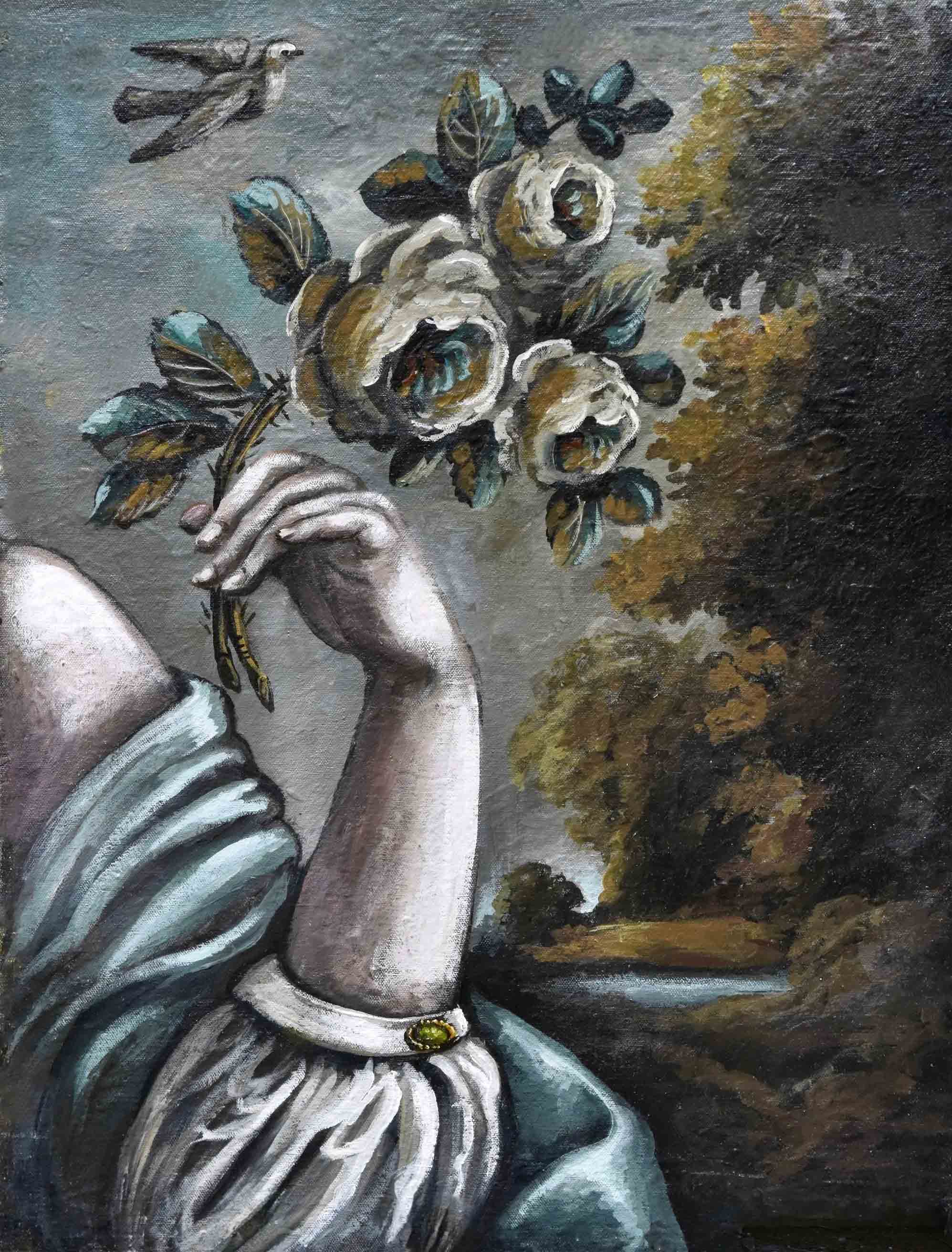
From cave murals to room-sized canvases, large-scale art has always been about pulling the viewer inside the picture.
The history of large-scale art spans painted sacred spaces, public murals, room-sized canvases, and modern installations. Across centuries and cultures, artists have worked big for a handful of reasons: to tell a shared story, to speak to a public, and to surround a viewer in color or imagery. This is a short tour of a few milestones, not the whole story, and certainly not a claim about who did it first.
Scale does something to you that a small picture can't. A painting you can hold at arm's length is a view you look at, while a wall of color that fills your vision is a space you stand inside. That shift, from looking at art to being surrounded by it, is the thread running through everything below.
Key Takeaways
- Large-scale art spans many media and periods, not a single movement or a fixed size.
- Painted sacred spaces, like the caves at Ajanta and the Sistine Chapel, came long before the modern museum.
- Wide canvases, like Monet's Water Lilies, change how much of a scene fills your field of vision.
- Murals carry shared or political stories to a public, well beyond the walls of a gallery.
- Installations, like Eliasson's The Weather Project, can turn an entire room into the artwork.
What Makes Art Large-Scale?
Large-scale art is work whose physical size shapes how you encounter it, and how it sits in a room. That's a useful working idea rather than a strict rule, since there's no single measurement that tips a piece into "large."
It helps to separate three things. There's the size of the object itself, a wall versus a postcard. There's the size of what's depicted, since a tiny image can show an enormous scene. And there's size relative to your own body, which is what makes a work feel intimate or overwhelming. A mural painted onto a building relates to its surroundings very differently from a canvas you could carry out the door, even if the two measure the same.
That last point matters more than it sounds. A painting made for a particular wall, a chapel ceiling, say, is designed to be seen from one spot, at one distance, in one kind of light, and lift it out of that setting and some of its meaning goes with it. A reproduction changes scale again, shrinking a room-sized painting down to an art print that fits above a sofa. That's not a flaw; it's simply how most of us live with these images today, and it's a lovely way to keep a piece of this history on your own wall.
Keep it in mind as the examples below move from fixed walls to portable canvases, and finally to prints you can hang at home.
Painted Sacred Spaces Before the Modern Museum
Artists painted walls and ceilings to tie images to sacred spaces long before paintings hung in a museum. The art and the room were made for each other, so you experienced the story by standing inside it.
The Caves of Ajanta
One of the earliest examples sits in present-day Maharashtra, India. Cave 1 at Ajanta is a painted monastery hall whose walls and ceilings carry murals dating to the fifth century. A fresco, in the strict sense, is painting done on wet plaster, so the color binds into the surface as it dries. Ajanta worked a little differently, since the plaster was dry when it was painted, which makes it close to fresco but not the same technique. Either way, the scale served the setting, wrapping worshippers in story and image.
The Sistine Chapel Ceiling
A thousand years later, in a very different tradition, Pope Julius II commissioned Michelangelo to paint the ceiling of the Sistine Chapel, a project Britannica dates to 1508 through 1512. This one is true fresco, painted into wet plaster across a vast curved vault, with nine scenes from the Book of Genesis. Michelangelo even accounted for distance, the figures grow larger and more expressive of movement toward the altar end so that they would read clearly from far below. One tradition didn't lead to the other, and neither was the "first." They remind us that a painted room can hold a story in a way a framed picture can't.
Modern Painting Expands the Viewer's Field of Vision
Modern painters used wide canvases to change how viewers experience color, gesture, and space. Instead of standing back from a scene, you stand within its reach.
Monet's Water Lilies
Claude Monet's Water Lilies at MoMA is the gentlest example. It's a triptych, a work made of three panels shown side by side, painted between 1914 and 1926 and running about 42 feet wide overall. Monet called this kind of project his "grandes décorations," and MoMA describes his aim of panels that would curve around a room with no edges or corners, so you feel lost in the water and light rather than looking at a tidy view on an easel. That's the quiet power of width: it fills more of what you can see.
If that serene, immersive feeling is what you're after at home, an impressionistic, water-inspired piece like Water Lilies and Koi by Ria Krishnan carries the same drift of color and light, in its own voice rather than as a copy of Monet.
Pollock's Autumn Rhythm
A generation on, Jackson Pollock used scale for energy rather than calm. His 1950 canvas Autumn Rhythm, held by the Metropolitan Museum of Art, is a large field of poured and flung paint that you take in with your whole body, following the motion across the surface. There's no tidy focal point to settle on, so your eye keeps moving, which is part of why the size matters so much.
Different feeling from Monet, same underlying idea: the physical scale is part of the experience, not a backdrop to it. A reproduction can only hint at that scale. Where an art print shines is in the color, composition, and mood: a well-made print of a Monet or a Pollock brings all of that onto your wall, even if the sheer 42-foot presence stays with the original. That's part of the quiet pleasure of living with prints of these works: you get the heart of them at a scale that suits a real room.
And if it's the loose, spontaneous energy that pulls you in, a gestural abstract like Gestural Approach by Thoth Adan, built on the movement of a single brush, brings that same restless motion to a wall of your own.
Murals Bring Art Into Public Life
Murals place art in front of audiences well beyond a gallery, often to carry a shared or political message. The size isn't only for drama; it lets the whole public see it at once.
After the upheaval of the Mexican Revolution, artists including Diego Rivera, José Clemente Orozco, and David Alfaro Siqueiros painted large public murals that spoke to national identity and history, supported by government patronage. The scale was the point, since a huge painting on a public building could reach people who might never set foot in a gallery and tell a story about a whole nation to a whole nation. Their politics and styles weren't identical, but they shared a conviction that art belonged on public walls, not only in private collections.
Those murals drew on both Indigenous Mexican and European roots, so this wasn't a twentieth-century invention so much as a powerful new chapter in a very old idea. Public, painted walls have carried shared stories for a long time, which quietly connects a Mexican mural to a cave at Ajanta across centuries and continents.
Installation Art Makes the Room Part of the Work
Installation artists can turn an entire room into the artwork. Installation simply means art built from a whole space and its elements, rather than a single object you hang on a wall.
The clearest example is Olafur Eliasson's The Weather Project, which filled Tate Modern's enormous Turbine Hall in 2003. Using mirrors, light, and mist, Eliasson lined the ceiling with mirror panels and set a semicircle of light beneath them, so the reflection completed it into a glowing sun. Visitors lay on the floor and watched their tiny reflected selves overhead in the haze. Here the art isn't on the wall at all; it's the space, the light, and you inside it. It's a different medium from a mural or a canvas, and a lovely bookend to this story, because it makes the viewer's experience the whole point.
Looking at Scale in Your Own Space
A print's size and placement change how you see it in a room. You don't need a Turbine Hall to feel it, just a step back and an honest look at how a piece sits against the furniture and the wall around it.
This is a modest echo of the history above, not a claim that a print at home recreates a museum installation. Still, the instinct is the same: give a piece enough room, and notice the relationship between the image, the wall, and everything nearby. The same thinking shows up in today's rooms through art history and color at home, and it's part of why one larger print can change the feel of a wall so completely. Whether you lean toward abstract art prints or something more pictorial, choosing a print with a little scale in mind is a small way to carry this long love of big, immersive art into a room of your own.
FAQs
What is large-scale art?
Large-scale art is work whose physical size shapes how you encounter it, in relation to your body and its setting. There's no single size cutoff across painting, murals, and installations, and it's different from simply depicting a large subject on a small surface.
What are some famous large-scale paintings in art history?
Often-cited examples include Michelangelo's Sistine Chapel ceiling, a fresco cycle painted from 1508 to 1512; Monet's Water Lilies at MoMA, a three-panel triptych about 42 feet wide; and Jackson Pollock's Autumn Rhythm (1950). These are notable examples, not a definitive ranking.
Why is so much contemporary art so big?
Scale gives contemporary artists a way to surround the viewer and shape a whole experience, not just an image to look at. A large work can fill your field of vision, change how you move through a space, and make you aware of your own presence in the room.
Does a painting's size affect its value?
Size alone doesn't set a painting's value, quality, or place in history. A small work can be hugely important, and a large one ordinary. Scale is one choice an artist makes for a reason, not a measure of worth.
What is the difference between a mural and an installation?
A mural is a large painting made on a wall or ceiling, so the image lives on a fixed surface. An installation uses a whole space, its light, objects, and your movement through it, as the artwork, so you experience it from the inside rather than viewing it head-on.
Art included:
The Bestowing by Jennifer Lanne
Published on: October 19, 2026 Modified on: October 21, 2026 By: Artfully Walls
Previous: How to Plan a Kitchen Gallery Wall
