How to Decorate a Large Wall: Artful Ideas Beyond the Ordinary
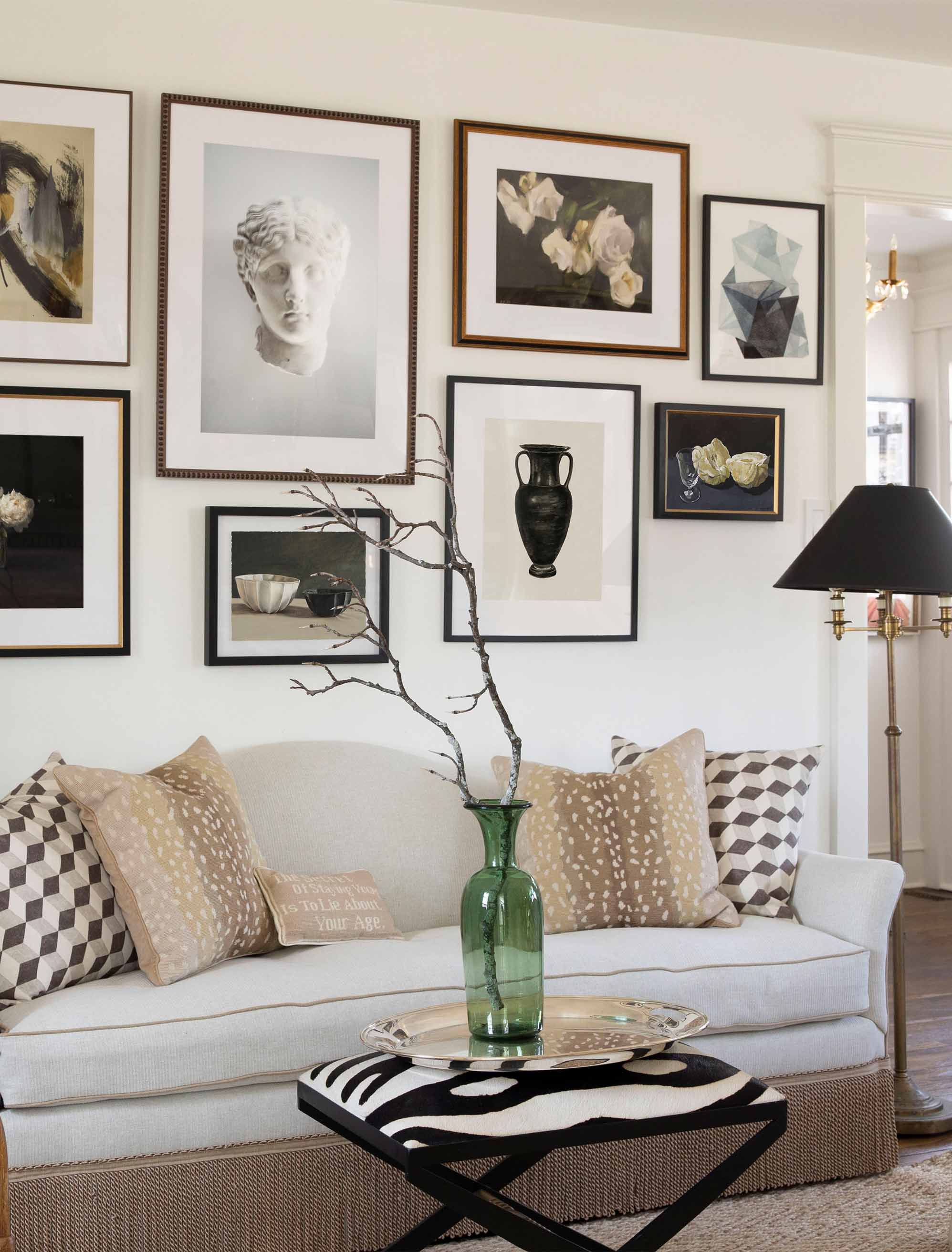
A large gallery wall makes a dramatic statement above a couch.
A large blank wall can feel like a lot. It’s one of those spaces that’s full of potential, but also easy to overthink. Do you fill it? Keep it minimal? Add a gallery wall? Go big with one piece?
The truth is, decorating a large wall isn’t about filling space; it’s about shaping it. Once you shift your mindset from “how do I cover this?” to “what do I want this wall to do?”, everything becomes easier. A well-placed piece of art can anchor the entire room, set the tone, and make everything around it feel more intentional.
Key Takeaways
- A large wall works best when you treat it as a focal point, not something to fill.
- One oversized piece can anchor the room and create an immediate sense of balance.
- Gallery walls feel strongest when they’re cohesive and built around a few larger anchor pieces.
- Mixing art with shelves, mirrors, or objects adds depth and makes the wall feel more layered.
- The key is connection; the art should relate to the furniture and space around it, not float separately.
Start by Thinking About Presence, Not Just Placement
The real challenge with a large wall is scale. An art print that works beautifully in a hallway or above a small console may not have enough visual weight for a wide living room wall, especially if there’s a sofa, bed, or dining table underneath it.
Instead of asking how much you can add, start by asking what the wall needs to do. Should it anchor the room? Bring in color? Add softness? Create a focal point? Once you know the role of the wall, choosing the right art becomes much easier.
This is where proportion matters. A larger print, a balanced pair, or a thoughtfully arranged gallery wall gives the eye somewhere to land. The goal isn’t to cover every inch, but to create a composition that feels generous, grounded, and connected to the rest of the room.
Go Big With One Piece That Sets the Tone
If you want the simplest, most impactful approach, start with one large piece. There’s something about a single oversized print that instantly gives a room direction. It creates a focal point without support and keeps the space feeling clean and uncluttered.
The key is getting the scale right. As a guide, aim for something that’s around two-thirds of the width of the furniture below it. Hang it so it sits just above that piece, close enough to feel connected, but not crowded.
In terms of subject, clarity matters more than complexity. Abstracts, landscapes, bold botanicals, or graphic compositions tend to hold up best. You want something that reads clearly from across the room, not something that only works up close.
Build a Gallery Wall That Feels Collected, Not Crowded
If you’re drawn to something more layered, a gallery wall is one of the most flexible ways to work with a large wall.
The difference between one that feels curated and one that feels cluttered usually comes down to structure. Start with one or two larger pieces to anchor the layout. These act as visual starting points and help everything else fall into place more naturally. Then build around them with medium and smaller prints to create rhythm and variation.
Keep spacing consistent, usually around two to three inches, so the pieces feel connected. And make sure there’s a thread running through everything, whether that’s color, subject, mood, or frame style.
When it works, a gallery wall doesn’t feel like lots of pieces. It feels like one cohesive moment on the wall.
Let the Wall Breathe by Mixing in Other Elements
Not every large wall needs to be filled entirely with framed art. Some of the most interesting walls come from mixing art with other elements that add depth and texture.
A floating shelf lets you layer smaller prints, objects, and books, which gives the wall a more relaxed, evolving feel. A mirror can reflect light and open up the space, especially when paired with art of a similar scale.
Even adding something tactile, like a textile or sculptural object, can break up the flatness and make the wall feel more considered. The key is to treat everything as part of one composition, rather than adding pieces as an afterthought.
Try a Triptych for Something Clean and Balanced
If you want multiple pieces but still want things to feel controlled, a triptych is a great option. Three pieces, evenly spaced, create a natural sense of rhythm. It’s structured enough to feel intentional, yet still offers more visual interest than a single piece.
You can choose one image split across three panels to create a continuous flow, or three separate works that share a similar palette or mood. Either way, the consistency is what makes it feel calm and balanced.
Use Height to Your Advantage
If your wall is tall, don’t try to shrink it; work with it. Vertical arrangements, stacked pieces, or taller formats help draw the eye upward and make the space feel more intentional. It’s a simple shift, but it changes how the whole room reads.
Leaning a large piece against the wall is another option. It adds scale without installation and brings a slightly more relaxed, studio-like feel that works especially well in casual spaces.
Common Mistakes That Make a Large Wall Feel Off
A large wall makes small decisions more noticeable, so it’s worth getting a few basics right.
Hanging art too high is one of the most common issues. Keeping the center around eye level helps everything feel grounded. Choosing pieces that are too small is another. If something feels off, it’s often because the art lacks presence.
For gallery walls, too many frame styles or overly wide spacing can break the sense of cohesion. Keeping things simple and consistent usually works best. And finally, treating the wall as separate from the room. The art should feel connected to the furniture and space around it, not like it’s floating above it.
Choose Art That Feels Right at Scale
When you’re working with a large wall, the art itself needs to hold up from a distance. For a single statement piece, look for strong composition and clear shapes that don’t get lost across the room. For gallery walls, focus on how the pieces relate to each other, even a loose connection in color or tone can make everything feel more intentional.
If you’re mixing art with other elements, simpler pieces tend to work best because they don’t compete for attention.
Starting with prints that are already designed to work together can make the process much easier. It gives you a cohesive foundation and helps everything come together more naturally.
Final Thoughts
A large wall isn’t something to fill; it’s something to shape. Once you focus on scale, balance, and how the art connects to the room, the whole process becomes more intuitive. Even a single well-placed piece can change how the space feels.
When it comes together, the wall doesn’t just sit there; it becomes the thing that anchors the room and gives it a sense of intention.
FAQs
What size art print do I need for a large wall?
Look for something that feels connected to the furniture below it, usually around two-thirds of the width. Larger pieces tend to work better than smaller ones.
How many prints should I use in a gallery wall on a large wall?
Start with one or two larger anchor pieces, then build around them. The goal is balance, not a specific number.
Should I hang one large piece or multiple smaller prints?
Both work well. A single piece feels clean and bold, while multiple prints create a more layered, collected look.
How high should art be hung on a large wall?
Aim for the center of the artwork to sit around eye level, about 57 to 60 inches from the floor.
What’s the best way to plan a gallery wall?
Lay everything out on the floor first or use paper templates on the wall. It helps you get the spacing and layout right before hanging anything.
Art included: Untitled by Anna Ullman, Peonies by James Zamora, She by Hilde Mork, Black & White Kubbe Bowls by Sarah Verardo, Rose Tumble by Lynne Millar, Ancient Vessel_5 by Ron Schneider - Artsong Studio, Iceberg VII. by Paulina Varregn, WV2652 by Pavel Feinstein
Published on: May 04, 2026 Modified on: May 05, 2026 By: Artfully Walls
Previous: The Power of a Pop of Color: How One Bold Hue Can Transform a Room Next: How to Plan a Kitchen Gallery Wall
