Get to Know Caroline Corrigan: Where Faith Meets Abstract Expression
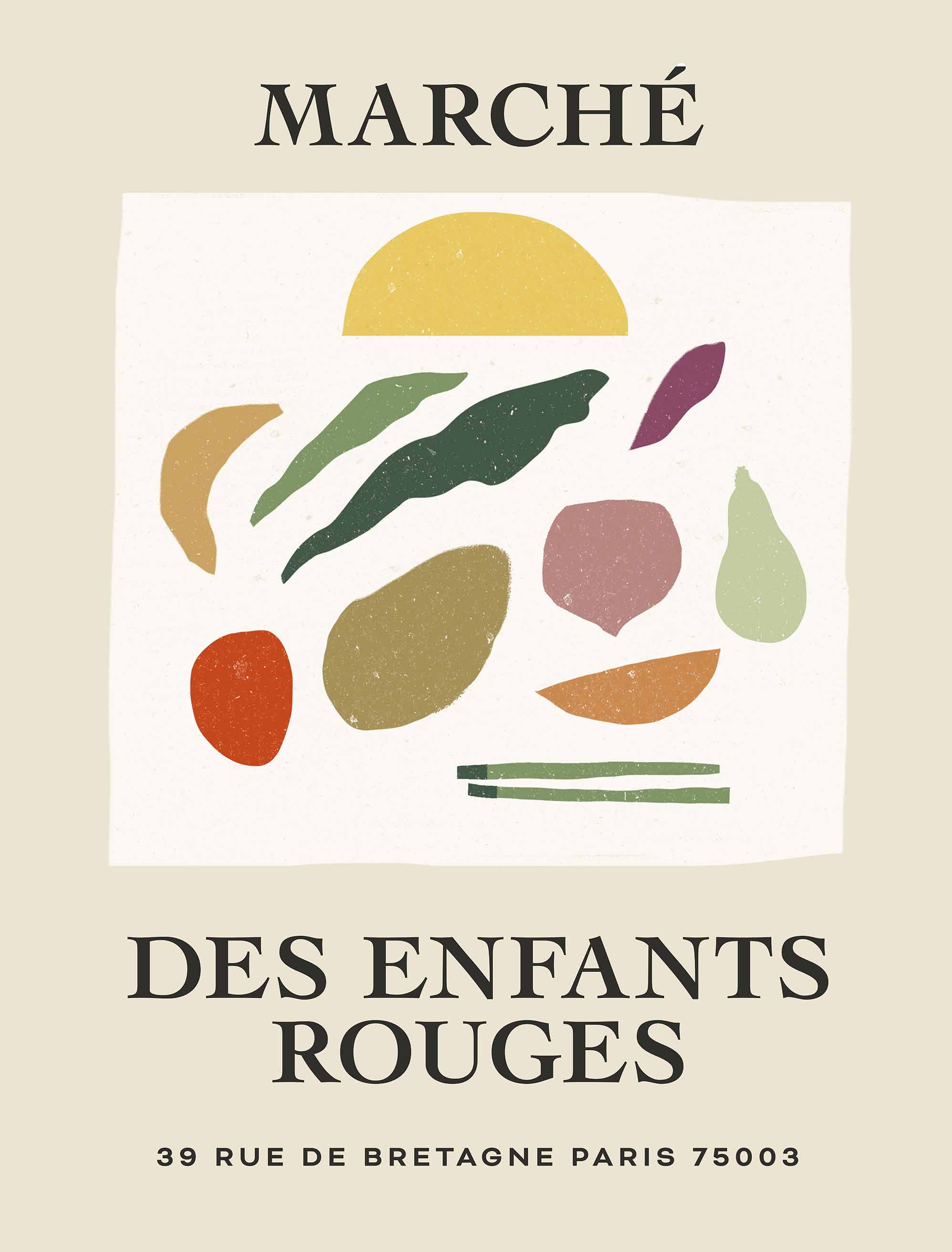
Marche print by Caroline Corrigan.
Caroline Corrigan is a multidisciplinary artist, designer, and educator based in upstate New York, working across printmaking, collage, and drawing. Her practice centers on analog processes, pattern, color, and tactile materials, drawing from the traditions of craft and design to create work that feels both grounded and contemporary.
Her prints sit in a distinctive space within modern illustration and surface design. They’re graphic and bold at first glance, but always rooted in hand-processing and material. There’s a clear conversation happening between past and present, between folk craft, decorative pattern, and contemporary abstraction, which is what gives her work that layered, collected feel so well-suited to art prints in the home.
Inside the Artist: Craft, Pattern, and the Analog Impulse
To understand Caroline Corrigan’s work, it helps to look at what’s actually happening on the surface. These aren’t just compositions; they’re built through layering, cutting, printing, and drawing, with the process still visible in the final piece.
Corrigan works across printmaking, collage, and drawing with a clear emphasis on analog methods. You can see the hand in the work, the slight variation in shape, the texture, the edges that don’t feel overly refined. Pattern, color, and material aren’t just stylistic choices; they’re part of how the image is constructed.
Her background brings that balance into focus. With a BFA in painting and experience in graphic design and illustration, her work moves easily between expressive and structured. That’s what makes her prints feel both composed and relaxed, something that holds attention without feeling overworked.
The Creative Pulse Behind Caroline Corrigan’s Work
There’s a clear energy running through Corrigan’s work. It’s bold, patterned, and tactile, but never overwhelming. That balance comes from a creative approach that’s grounded in process and shaped by a deep understanding of how color, material, and composition interact.
Analog Process in a Digital World
In a design landscape that leans heavily digital, Corrigan’s use of printmaking, collage, and drawing stands out. You can see how each piece is built, the layering, the slight inconsistencies, the texture that comes from working by hand. That’s what gives the work warmth and why it feels different once it’s on your wall.
Pattern as a Visual Language
Pattern in Corrigan’s work isn’t just decorative. It’s structural. She uses repetition, rhythm, and shape to build energy across the surface, drawing from traditions in textile design and folk art. The result is work that feels dynamic and layered, even when the composition is simple.
Color That Anchors the Room
Color is often what you notice first. Her palettes are confident and intentional, often built around contrast or a tight tonal range. That makes her prints easy to place; they hold their own on a wall without overwhelming the rest of the room.
The Collage Sensibility
Collage is more than a technique in her work; it’s a way of thinking. There’s a constant interplay between shapes, textures, and references. Elements feel layered and slightly unexpected, but always resolved into a composition that feels complete. That tension is part of what keeps the work visually interesting over time.
Drawing and the Graphic Line
Line brings structure to everything else. There’s a clarity to her linework that comes from her illustration background. It defines shapes, creates movement, and keeps even more abstract compositions feeling grounded.
Craft and Community as Part of the Practice
Corrigan’s work is closely tied to the idea of making as a shared experience. Through projects like Collage Night and the Half Moon Market, she’s actively involved in building creative spaces. That connection to craft and community comes through in the work itself; it feels approachable, not precious.
Artistic Influences and Inspirations
Corrigan’s work draws from a wide range of influences, which is part of what makes it feel so visually fluent. You can see references to art history, print culture, and design, all working together in a way that feels natural rather than forced.
The Abstract Expressionist Influence
The large-scale abstract works at the Empire State Plaza in Albany have served as a lasting reference point.
There’s a similar confidence in color and composition in her prints. Even at smaller sizes, they carry presence, which is why they work so well as focal pieces.
Sister Corita Kent and Graphic Print Culture
There’s also a connection to the graphic print tradition, especially artists like Sister Corita Kent. You see it in the bold color, flat shapes, and the idea of print as something accessible and meant to be lived with.
Print Media and the Editorial Eye
Corrigan’s interest in editorial illustration and print media shows in the clarity of her work. Each piece reads quickly, but still holds attention. That balance is what makes her prints easy to place in a home; they add something immediately without losing interest over time.
Standout Works by Caroline Corrigan
Looking at a few of Caroline Corrigan’s prints side by side, you start to see how consistent her visual language is, even as the subject shifts. There’s always that same balance of bold shape, confident color, and a sense of hand that makes each piece feel both graphic and lived-in.
Marché
This piece leans into a market-inspired composition, simplified produce shapes arranged with a strong sense of balance and spacing. The color palette feels warm and grounded, with muted tones that still carry presence.
What makes it work so well on a wall is that it reads clearly from a distance, but up close, you start to notice the subtle texture and variation in each shape. It’s an easy anchor piece, something that can sit above a console or dining table and quietly define the space without needing anything else around it.
Citrus
Citrus takes a more minimal approach, focusing on a few repeated forms with a loose, almost stamped texture. The grid-like pattern and slightly imperfect edges give it that tactile, hand-built quality that runs through Corrigan’s work.
It’s a smaller, more contained composition, which makes it especially easy to layer into a gallery wall. It adds color and pattern without overwhelming the surrounding pieces, the kind of print that brings a bit of brightness into a kitchen or corner without trying too hard.
Flora
Flora shifts into a more fluid, line-based composition. The blue linework moves across the surface in a way that feels rhythmic and continuous, almost like a visual shorthand for plants rather than a literal depiction.
It’s lighter and more open than some of her other work, which makes it a good counterbalance when mixing pieces. It works well in spaces where you want something graphic but not heavy, something that adds movement without completely filling the wall.
Oysters and Wine
This piece shows a more layered, collage-driven side of her practice. You can see the cut shapes, the overlapping textures, and the mix of materials coming together into a still life that feels both playful and tactile.
There’s more depth here than in her flatter graphic works. The composition feels slightly looser, more assembled than drawn, which gives it a different kind of presence on the wall. It’s a great option if you want something that feels a bit more textural and relaxed, especially in dining or living spaces where that sense of warmth really comes through.
How to Style Your Home with Caroline Corrigan’s Art
Corrigan’s prints are easy to work with because they strike a balance, bold enough to anchor a wall, but flexible enough to layer into a larger space. They sit naturally in interiors that lean toward contemporary, eclectic, or craft-influenced styles. Spaces with natural materials, warm neutrals, and some existing texture tend to bring out the best in the work.
As standalone pieces, they hold their own above a sofa, bed, or console. The clarity of the composition means they read well from a distance, which is what gives them presence in a room. They also work well in gallery walls. Because the palettes are controlled, you can mix them with other pieces in similar tones without everything feeling too matched.
Botanical and pattern-led prints, in particular, feel at home in kitchens and dining areas, where you want something that adds warmth and energy without feeling overly styled.
Bring Bold Craft and Graphic Warmth Into Your Home With Caroline Corrigan’s Art
What makes Caroline Corrigan’s work stand out is how much it holds at once. It’s visually immediate, but never shallow. Decorative, but never just decorative. There’s always a sense of process and material behind what you’re looking at.
Her collection of prints offers a way to bring that into your own space in a way that feels accessible. You’re not just filling a wall, you’re adding something with structure, rhythm, and a clear point of view.
And that’s what makes these pieces work so well in a home. They don’t just sit on the wall; they shape how the space feels, adding depth, energy, and a sense of intention that builds over time.
Art included: Marche by Caroline Corrigan
Published on: April 14, 2026 Modified on: April 15, 2026 By: Artfully Walls
Previous: First Apartment Wall Art: a Starter Guide for Renters Next: Lemon Trees and Sea Breezes: Why Mediterranean Wall Art Is the Ultimate Mood Booster
